
Sustainable Development is development that meets the needs of the present without compromising the ability of future generations to meet their own needs.
— The Brundtland Commission
The concept of Sustainable Development unites three spheres: the economy, society, and natural capital. The Sustainable Development model can be structurally represented as a truncated pyramid, whose foundation is made up of natural ecosystems, since only the entire set of species makes the Earth’s surface suitable for sustaining life. Biospheric ecosystem mechanisms allow the planet to maintain an unstable balance between overheating and overcooling of its atmosphere, regulate the gas composition of the atmosphere, and maintain stable environmental parameters suitable for our existence. Natural ecosystems form a favorable habitat for living organisms and provide the conditions for sustainable development, because it is Life that creates the conditions for Life!
Each type of ecosystem can be viewed as a foundation that sustains Life itself, and therefore the entire system of our society. Above the natural ecosystems in this model lies the layer of artificial (anthropogenic) ecosystems — gardens, parks, fields, and arable land. These ecosystems are organized differently; they are closely tied to human activity and do not fully perform the ecosystem functions of environmental regulation, since most of their energy/biomass is used by people for their own needs.
Above this basic foundation lies the socio-economic layer. The organization of the social and economic spheres of life is based on the use of natural ecosystem resources.
An important element of this model is understanding that destroying the foundation will mean that the upper parts of the pyramid can no longer exist. Natural ecosystems form a favorable habitat for living organisms and provide the conditions for sustainable development. The loss and reduction of biodiversity causes irreparable damage to the biosphere’s ability to carry out ecosystem functions, which include: creating a favorable environment for life, regulating and stabilizing the climate, water regulation, reducing the number of natural disasters, soil formation, maintaining the cycle of chemical elements, and others. It follows that if the foundation is removed, everything collapses. The problem is that it isn’t just the model that collapses, like an economic default or a cultural revolution — a disruption of the life cycle itself can occur. As long as natural ecosystems retain their original composition and structure, these communities can flexibly respond to climate fluctuations, soften sharp swings, and reduce the consequences of negative phenomena. Preserving plant cover prevents the loss of fertile topsoil on mountain slopes and prevents destructive floods and mudslides that cause enormous damage. Thus, the surviving natural ecosystems of Kyrgyzstan are powerful centers of stabilization not only for mountainous areas but also for adjacent lowland territories. Today, in the course of socio-economic development, it is necessary to find conditions and solutions that preserve natural ecosystems so that they continue to sustain the existence of Life on Earth!

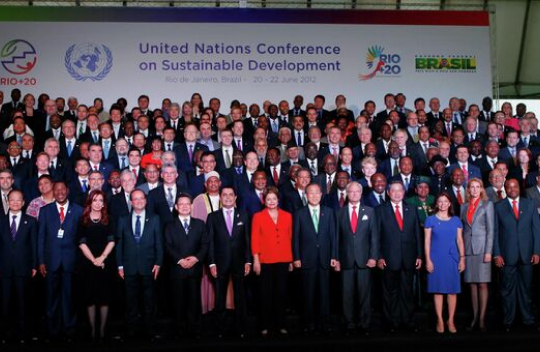
From June 20 to 22, the World Summit on Sustainable Development “Rio+20: The Future We Want” was held in Rio de Janeiro, Brazil. “Rio+20” was the largest UN event of the past 20 years — around 50,000 people from 193 countries took part in the conference on sustainable development.
V.A. Korotenko “The Price of Development, or Choosing the Future We Want” read more


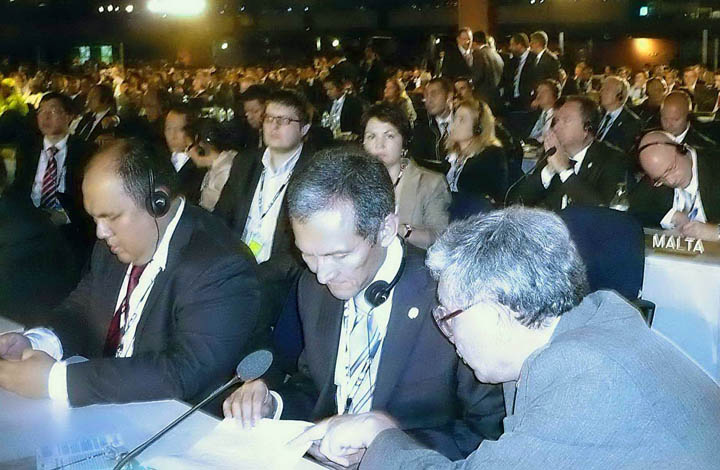
In Rio de Janeiro, Kyrgyzstan presented its own position, later called “Kyrgyzstan’s Position on RIO +20”, which was jointly prepared by the Ministry of Foreign Affairs, the Ministry of Economy and Antimonopoly Policy, the Office of the President, and representatives of the country’s science, international, and public organizations.
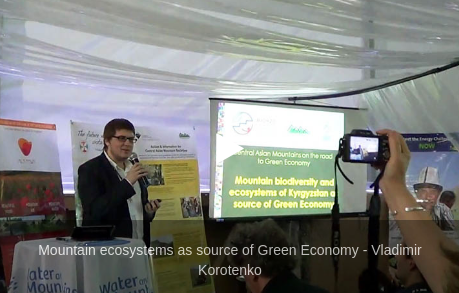
This work was continued in the report “Prospects for the Green Economy in the Kyrgyz Republic”, which examined the main trends in terms of people’s quality of life, the state of natural ecosystems and agriculture, and separately addressed the institutional component and governance.
Following the Rio+20 Summit, a National Sustainable Development Strategy through 2017 was developed in 2013 and approved by Presidential Decree.
To implement the Strategy, the Government developed the Program for the Kyrgyz Republic’s Transition to Sustainable Development (2013-2017) and a 5-year implementation plan.
The adoption of the Sustainable Development Strategy reformats the priorities and directions of existing state policies, including in the area of service provision. The concept of Sustainable Development is built on the intersection and equal political attention given to the spheres of society, ecology, and economy. Such policies include measures in the areas of social and economic development, social justice, environmental management, ensuring environmental security, and sustainable resource use.
The Program was developed by the Government to ensure the implementation of the sustainable development priorities of the Kyrgyz Republic defined in the National Sustainable Development Strategy for 2013-2017. The Program and Plan serve as a management tool that details the country’s steps toward sustainable development, the resources involved, and the expected results.
The Government’s Program and Plan for the Transition of the Kyrgyz Republic to Sustainable Development (2013-2017) read more