The international scientific community, in its discussions, has come close to accounting for the biotic mechanism of environmental regulation, and in particular to attempting its economic valuation. Based on various studies, assessments, and analyses, experts have identified several ecosystem services or goods whose importance cannot be overstated.
read more

An example of ecosystem functions is the operation of the biotic pump of atmospheric moisture. Only natural primary forests, native to a given territory, are able to ensure the long-term sustainable functioning of the biotic moisture pump, since their genetic properties are correlated with the geophysical features of the area in which they grow. Artificial plantations of exotic trees with genetic programs that do not match the local area are not able to sustain themselves indefinitely in a territory foreign to them without leading to the degradation of environmental conditions.
read more
Undisturbed floodplain communities have great species diversity. Many representatives of the plant and animal world spread through them. They support the unity and normal functioning of neighboring ecosystems. A disturbed floodplain ecosystem is unable to withstand the destructive force of a mountain river, or prevent the frequency and scale of damage from floods and mudflows. In addition, such an ecosystem reduces the level of moisture and leads to the drying out of areas around rivers due to the drainage of underground runoff.
read more

Issyk-Kul, having no outflowing river, is subject to an extremely slow process of waterlogging. The slowness of this waterlogging process is largely ensured by the work of the natural filters of Lake Issyk-Kul.
read more
Diagram of the biological filter that purifies streams flowing into Lake Issyk-Kul
As a result of scientists’ work, it became clear that an environment suitable for human life is created and sustainably maintained in a state optimal for the existence of Life by natural ecological communities of living organisms — ecosystems — which compensate for environmental disturbances that do not exceed the threshold of destruction of this system.
read more
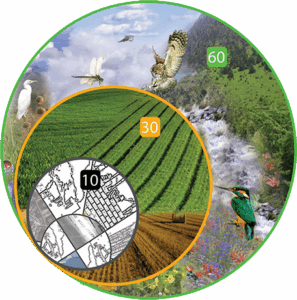 THE 10/30/60 MODEL
The optimal percentage ratio of territories to ensure environmental sustainability
(10% urban landscapes, 30% agricultural land, 60% natural ecosystems)
The Red Book is an appendix and supplement to the list of animals, plants, and fungi threatened with extinction, approved by the Government of the Kyrgyz Republic. It contains information on the most vulnerable species and includes practical recommendations for stabilizing and restoring their numbers. The Red Book is one of the forms of preserving biological diversity and natural ecosystems from destructive human activity.
read more
E.J. Shukurov: The Red Book of Kyrgyzstan
Biodiversity conservation policy is aimed at ensuring ecological balance. The status of species listed in the Red Book can be used to judge the well-being of ecosystems and their ability to provide favorable conditions for the existence of Life. The shrinking of ranges and populations, and the disappearance of species sensitive to ecosystem disruption, signal that the basic mechanisms sustaining the conditions for human and societal existence are in serious danger.


The Red Book is an appendix and supplement to the list of animals, plants, and fungi threatened with extinction, approved by the Government of the Kyrgyz Republic. It contains information on the most vulnerable species and includes practical recommendations for stabilizing and restoring their numbers. The Red Book is one of the forms of preserving biological diversity and natural ecosystems from destructive human activity.
read more
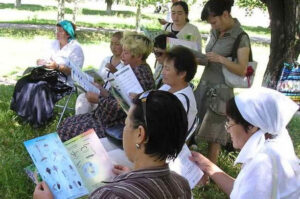
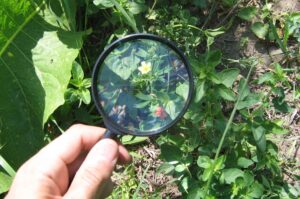
The Red Book is an appendix and supplement to the list of animals, plants, and fungi threatened with extinction, approved by the Government of the Kyrgyz Republic. It contains information on the most vulnerable species and includes practical recommendations for stabilizing and restoring their numbers. The Red Book is one of the forms of preserving biological diversity and natural ecosystems from destructive human activity.
read more

Mechanisms for biodiversity conservation are the institutional and legal mechanisms for protecting natural developed ecosystems that provide ecosystem services to local communities. This includes creating a system (network) of matrix sites for ecosystem restoration (micro-reserves) that protect local pockets of natural habitat.
read more
Proper conditions for maintaining a favorable environment for life consist of: expanding the country’s natural ecosystem territories and restoring destroyed ecosystems (at the level of provinces and districts) sufficiently to ensure their conservation and normal functioning, with the goal of improving the population’s quality of life and the sustainable reproduction of biological resources. read more
read more
Expanding the territories of natural forest communities is one of the most important mechanisms for biodiversity conservation. To expand ecosystem territories, it is necessary to create micro-reserves.
A micro-reserve is a relatively small area where no economic activity is carried out: no plowing, grazing, construction, etc. A micro-reserve is an island of natural biological diversity amid agricultural land depleted by human activity: pastures, fields, orchards, and parks.
read more

The concept of natural greening focuses primarily on using local ecosystem prototypes and the “design ideas” that nature itself offers for landscaping.
Introducing legal protection for natural ecosystems, prohibiting the replacement of natural ecosystems with artificial (anthropogenic) ones;
Reserving land for protected areas, expanding the area of specially protected natural territories to 15% of the country’s total territory, and introducing a ban on lowering the level (category) of their legal protection;
Carrying out procedures for transferring protected area lands to other categories only within the authority of Parliament, following broad public discussion and the conclusions of independent experts;
Broad involvement of the public in the management of specially protected areas;
Introducing monitoring of the state of natural ecosystems and biological diversity. The key indicators in Kyrgyzstan are: a) the size of forested area; b) the condition and productivity of pasture ecosystems; c) the proportion of flora and fauna species threatened with extinction relative to the total species composition; d) the condition of aquatic communities; e) the state of preservation/disturbance of ecosystems based on indicator plant and animal species;
Strengthening institutional and legislative mechanisms for the conservation of natural ecosystems (for example, through: preferential taxation for entrepreneurs and private investors who invest in biodiversity conservation; increasing fines and criminal penalties for offenses against rare and endangered Red Book species, etc.);
Implementing all investment projects under strict environmental safety control, with environmental review and Environmental Impact Assessment (EIA);
Introducing innovative institutional mechanisms for managing state environmental spending programs, taking into account best international practices, such as the “Public Contract for Biodiversity Conservation” model;
Creating conditions in which the primary users of land, forests, water bodies, and hunting and fishing grounds are primarily interested in accounting for living resources. Introducing a system of rent payments for the use of natural resources;
Conducting environmental review of all draft laws based on “Standards for Conducting Specialized Types of Review”;
Creating protected areas in all districts capable of reproducing the vegetation cover matrices of all major herbaceous ecosystems;
Building the capacity and functional literacy of women and men in the context of necessary adaptation to climate change by expanding access to informational and educational technologies and advisory resources, especially in rural areas.
Develop a long-term program based on interagency cooperation for preventing and adapting the population to climate change, taking the gender dimension into account.
Incorporate energy efficiency requirements for new buildings into construction standards;
Develop and implement state and municipal energy efficiency and energy conservation programs at all levels;
Legislatively establish a favorable tax climate for organizations developing renewable energy sources (solar, wind, biogas, micro-hydropower), for example through incentive funds and tax breaks;
Identify and formally establish state and local government institutions responsible for adapting the population to changing environmental conditions — climate change and other consequences of the ecological crisis;
Building the capacity of state and municipal employees on issues of ecosystem conservation and sustainable use of natural resources.
Develop a methodology and provide training for local government employees and local kenesh deputies on the sustainable development of local communities, taking into account long-term climate change and the unequal distribution of risks among different social groups;
Create an effective system for preparing and presenting environmental information for decision-makers through the development and implementation of sustainable development indicators and the preparation of periodic analytical materials.