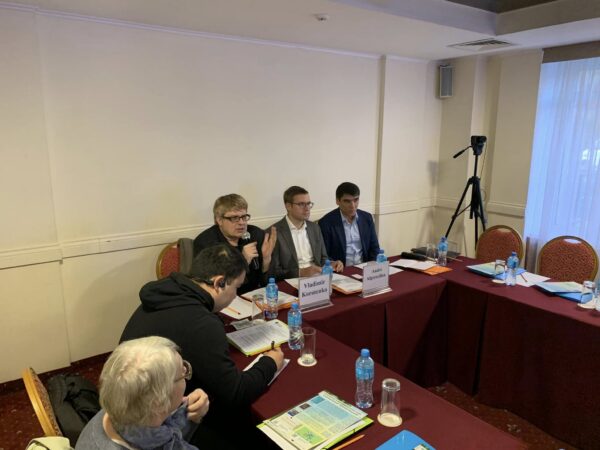
On November 29, 2024, an expert roundtable titled “Challenges of Biodiversity and Climate Preservation: International and National Levels” took place in Bishkek, organized by the Konrad Adenauer Foundation and the Environmental Movement “BIOM”.
The event brought together ecologists, climatologists, representatives of civil society, the scientific community, government bodies, and international organizations.
One of the central themes was Kyrgyzstan’s participation in international processes under the UN Convention on Biological Diversity and the UN Framework Convention on Climate Change, including the outcomes of COP16 and COP29.
Participants discussed key environmental challenges, issues of biodiversity preservation, the fulfillment of international obligations, and the necessity of developing national strategic documents. In the discussion on biodiversity preservation, special attention was paid to the theory of biotic regulation and the role of natural ecosystems in supporting human well-being and ensuring environmental security.
A separate direction of discussion was the development of the National Strategy and Action Plan for Biodiversity Conservation (NSAP). Experts emphasized the need for broad public participation, the application of an ecosystem approach, and the development of sustainable agricultural practices.
Participants also reviewed the provisions of the Baku Declaration, issues of strengthening regional cooperation in the field of climate change, and the role of youth in promoting the principles of sustainable development.
The proposals and comments formulated at the roundtable were decided to be forwarded to the expert group working on the NSAP for further consideration in shaping national policy in the area of biodiversity preservation.
The roundtable became a platform for professional exchange of opinions and the formation of proposals aimed at strengthening cooperation between the government, the expert community, civil society, and international partners.