
The promotion of sustainable energy development is extremely important for eliminating poverty, protecting public health, ensuring access to education, creating jobs, and promoting overall economic development. In recognition of the importance of energy for sustainable development in the country, a draft Program for Energy Conservation and Energy Efficiency Policy Planning in the Kyrgyz Republic for 2015-2017 has been developed.

The draft was posted on the government website for an entire month so that everyone could familiarize themselves with it and make their reasoned adjustments. Following this, a discussion of the draft took place in Bishkek on March 12 in the building of the Ministry of Energy and Industry of the Kyrgyz Republic, with the participation of the Minister’s Advisor Marat Cholponkulov, State Secretary of the Ministry of Energy Batyrkul Bayetov, MRTG expert Valentina Kasymova, leading energy sector specialists, representatives of the CASEP program, inventors and rationalizers, as well as media representatives.

The event was organized by the NGO “BIOM,” which signed a tripartite Memorandum of Cooperation with the Ministry of Energy and the Norwegian Society for the Conservation of Nature “Naturvernforbundet” on March 5 of this year. According to the organizers, the activities under this Memorandum involve the implementation of policies to promote the development of a sustainable energy sector in terms of promoting energy efficiency ideas and using renewable energy sources for developing eco-friendly types of energy and improving the quality of life of local communities.
According to the Minister’s Advisor Marat Cholponkulov, the strategic frameworks of the discussed Program were determined based on the development strategy of the fuel and energy complex until 2025. The document presented for public discussion is intended to become a comprehensive mechanism for government management of the effective use of energy resources and enhancing the energy efficiency of the domestic economy. The goal of the project is to reduce electricity consumption by at least 5 percent over three years. Cholponkulov spoke about the need to establish a training and analytical center for promoting state energy conservation policy at the Ministry of Energy and Industry of the Kyrgyz Republic.

Batyrkul Bayetov, in his speech, emphasized the importance of adopting the Program for Energy Conservation and Energy Efficiency Policy Planning in the Kyrgyz Republic for the coming three years, because the country is experiencing constant electricity overconsumption, for which no accountability is sought from budgetary organizations. “Even during the summer, when there is bright sunshine, 24.6 million kilowatt-hours of electricity are consumed daily in the country! It feels like we live for today, without thinking about tomorrow,” said the State Secretary of the Ministry of Energy.

In Valentina Kasymova’s opinion, today the primary electricity in Kyrgyzstan is generated at hydropower plants. All economic factors of interaction between energy systems during the Soviet era are no longer effective. However, all hydropower plants urgently require significant financial investments for repairs, operate at their limits, and the Toktogul reservoir sees a small volume of water year after year during the season. Moreover, ecologists predict impending low water levels in rivers and intense glacier melting.
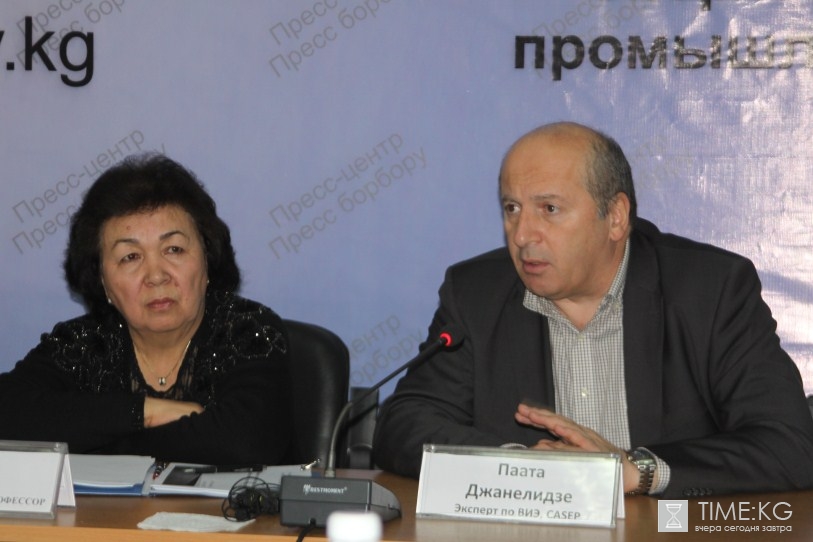
“This should prompt us to consider ways to find alternative energy sources, for example, from wind, solar, and hydraulic gradients in numerous mountain rivers,” said the leader of the CASEP program, Paul Mullen.
Examples of energy generation through renewable energy sources were presented by engineer-inventors Grigory Rogozin and Vladimir Ryzhkov. However, at the moment, their inventions rely more on the enthusiasm of the specialists themselves and support from private businesses rather than the state. When will officials finally consider the benefits of implementing innovations in the domestic economy and begin to implement energy conservation policies in practice, not just in words?

Alongside us is a powerful giant—China. It is intensely implementing the generation of renewable energy, installing photovoltaic panels, solar collectors, and wind turbines everywhere. Another neighbor, Kazakhstan, has also begun actively promoting energy efficiency policies over the past few years. Energy-efficient construction programs in rural areas have been adopted in Uzbekistan as well. Meanwhile, Kyrgyzstan, rich in water resources and having 270 sunny days a year, has started importing electricity from its neighbors!

Mikhail Yakovlev from the NGO “BIOM” shared examples of energy-saving measures in three schools in Kyrgyzstan. Through the installation of energy-efficient lighting, presence sensors, replacing old windows with new energy-saving glass, and carrying out thermal insulation activities in classrooms. However, all these activities were funded by donor money from the Norwegian Society for the Conservation of Nature. No donor can make all our schools energy-efficient! This is the task of our state.
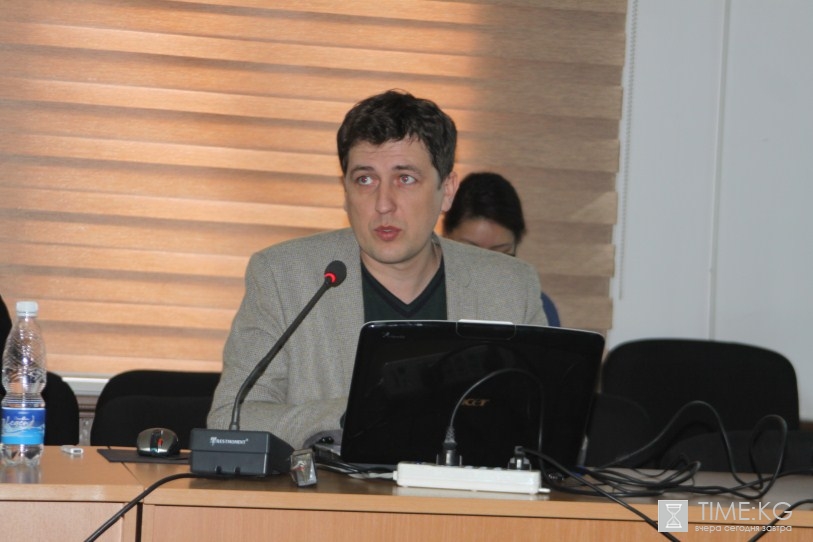
Meanwhile, journalists recalled that the Program for Energy Conservation and Energy Efficiency Policy Planning had already been discussed in the Kyrgyz Republic, and 2012 was even designated the Year of Energy Conservation! Back then, experts noted that it is very risky for the country to rely solely on hydropower. It has a high dependency on climate change and seismic activity.
A natural question arises: who and when will report to the public on compliance with lighting, ventilation, and heating standards? Who and when will report to consumers regarding the poor quality of electricity? Who will explain why the specific implementation of energy conservation measures stalls year after year? Perhaps the participants in the round table have now gained confidence that the again-discussed Program for Energy Conservation and Energy Efficiency Policy Planning for 2015-2017 will not remain another declarative document but will come to life.