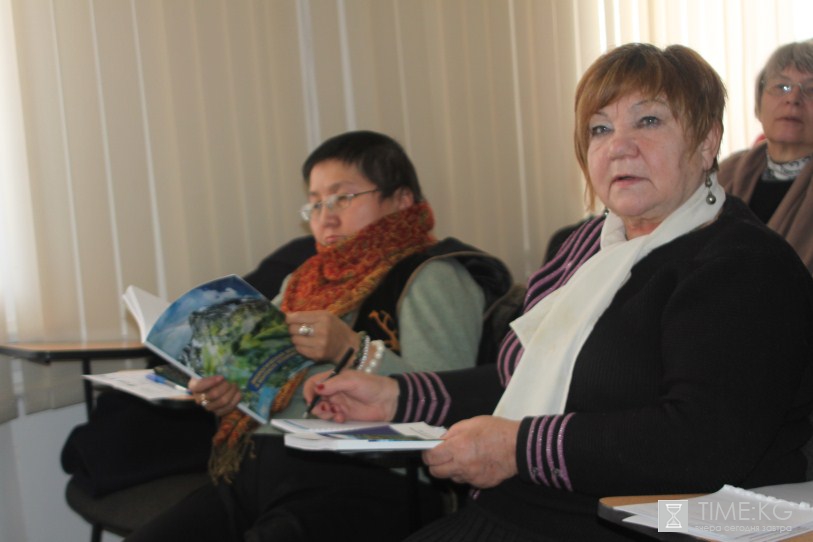
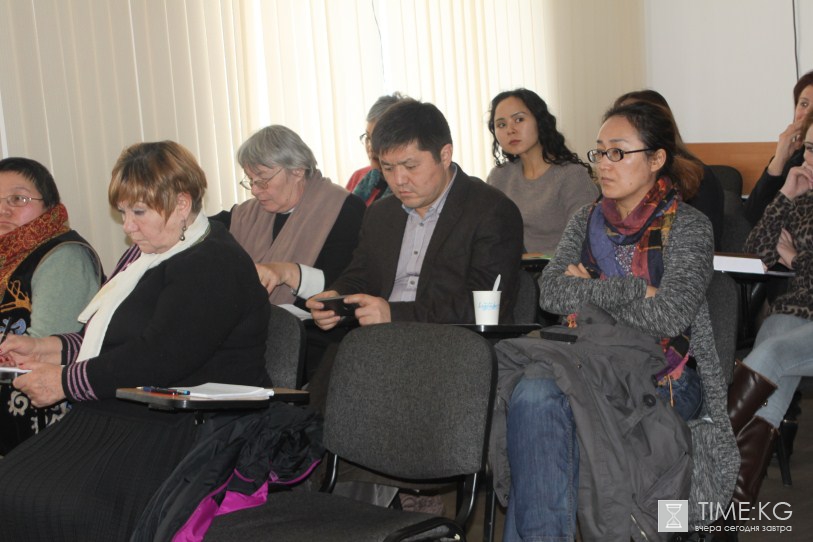
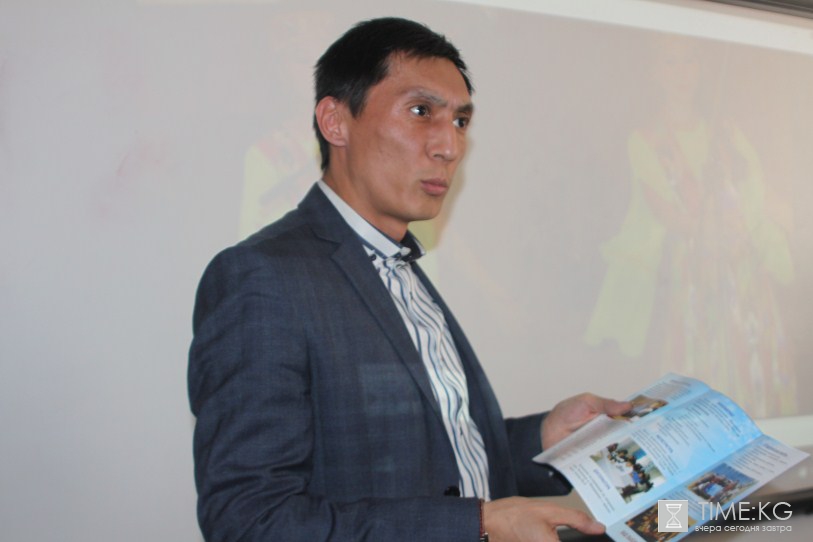
The end of 2015 marked a constructive dialogue between representatives of the media, educators, experts, employees of the Ministry of Education and Science of the Kyrgyz Republic, and members of the OS under the Ministry of Education and Science of the Kyrgyz Republic. Within the framework of the EU project “Support and Monitoring of Educational Reforms in Kyrgyzstan,” they discussed current issues on the way to ensuring ecological security in our country.
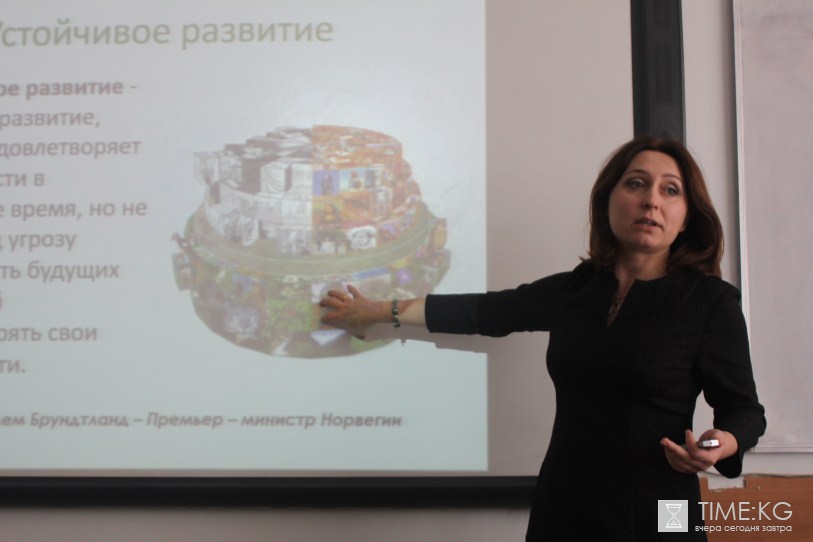
“Sustainable Development is a process of change in which the exploitation of natural resources, personal development, and institutional changes are aligned with each other and strengthen the current and future potential for human development,” said the Chairman of the ED “BIOM” Vladimir Korotenko. He referred to the key components of the sustainable development model, which include: economic development through risk management, environmental responsibility, rational use of natural resources, “zero” waste (ideally), institutional changes and management quality, poverty eradication and social progress, and financial and technical assistance from developed countries for the sustainable development goals of developing countries.
However, according to the information presented at the round table, expert assessments indicate that over 75% of Kyrgyzstan’s territory is already under increased risk of ecological destabilization. The degradation of ecosystems is also an urgent issue. “Historical pollution, waste accumulators, and increasing emissions of toxic substances from stationary and mobile sources threaten the state of the environment and public health,” said Vladimir Korotenko. “The subsoil of the Kyrgyz Republic contains deposits of various minerals, the development of which, with regard to ensuring ecological safety, significantly contributes to economic development. The share of gold mining in GDP is about 11%, 40% in industrial production, and 48% in the country’s export. However, the finiteness of mineral resources requires the state to calculate the benefits and costs of their extraction in the long term, taking into account their depletion from the balance of the natural capital of the country.”
Only during the period from 2006 to 2010, average water losses during transportation amounted to 23% of the volume of water intake! The declared figures cannot leave indifferent anyone among the minimally educated citizens of the country! What should the country do today to ensure the principle of “proper condition” as the natural basis for ensuring ecological security?
Today, the Kyrgyz Republic has taken a course towards Sustainable Development! Proof of this is the adoption of important strategic documents and the prioritization of the so-called “Green Economy,” the establishment of a National Council for Sustainable Development under the President of the Kyrgyz Republic in November 2012, the approval of the National Strategy for Sustainable Development until 2017, the development of a Program and Plan for five years to transition the country to sustainable development. Finally, this includes the adoption of Sustainable Development Goals and the first steps of Kyrgyzstan in developing a long-term Sustainable Development Strategy – 2030.
Thus, there is political will, but risks for achieving the Sustainable Development Goals remain.
The Executive Director of ED “BIOM” Anna Kirilenko presented a report stating that we continue to live in a risk society, moreover, we continue to accumulate them! “Only the formation of a healthy environment can become the foundation for Sustainable Development!” believes the ecologist. “The risk has taken new forms and has transitioned into a possible self-destruction of life on Earth. The evolution of risks—risk qualification, health risk, risk of impoverishment and hunger—has now become a risk for all living things.”
Unfortunately, society is still not ready to fully understand that it continues to accumulate risks for life by thoughtlessly treating non-renewable natural resources that took billions of years to form. People increase consumption and leave behind mountains of waste, rapidly growing and polluting the ecology.

In this context, understanding and having information about existing ecological problems become key factors in preserving the environment in a “proper condition.”
The organizer of the round table – ED “BIOM” with the support of the Konrad Adenauer Foundation aims to raise the level of ecological literacy among the population. “Education is not a sphere of social costs and expenses, but an area of investment, including in ensuring safety and sustainability for the country,” the organizers are convinced.
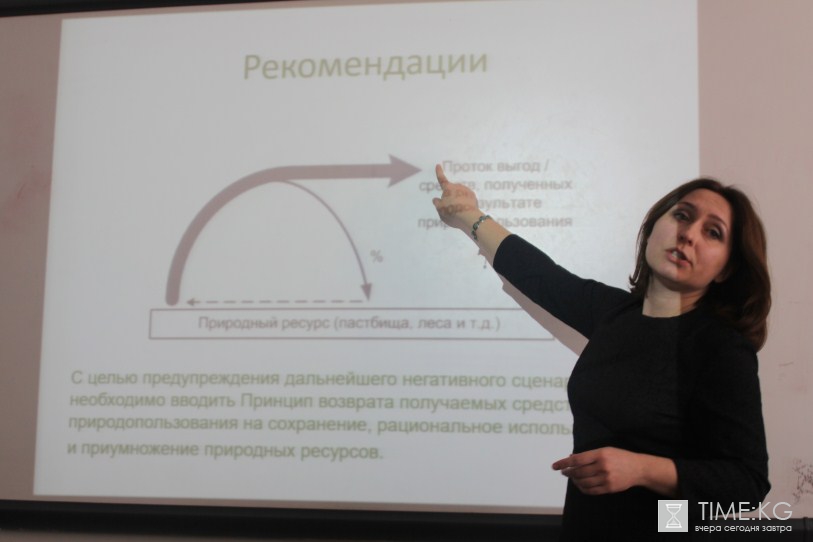
“Today, more than ever, it is important to enhance the effectiveness of public participation in environmental expertise and assessment procedures regarding human impact on the environment, and to expand the system of access to information, advanced technologies, and resources. It is very important to understand that we need to implement environmentally oriented management, that is, to include ecological components in all national programs and strategies, and to introduce indicators of the condition of natural ecosystems and biological diversity into strategies,” Anna Kirilenko said.

In conclusion of the event, Vladimir Korotenko presented all participants with a new book titled “Ecological Safety of Kyrgyzstan.” It is published to assist academics and educators, as well as individuals responsible for decision-making with the support of the Konrad Adenauer Foundation. Today, this foundation understands that at a global level, although a number of international-scale ecological problems have been solved and various global agreements have been reached, control and management of risks are carried out not only at the level of intergovernmental relations, but also at the level of government. The resolution of specific local problems determines the possibility of achieving the goal of managing ecological safety at regional and global levels. The management goal is achieved by adhering to the principle of transferring information about the state of the environment from local to regional and global levels.
The ecological security system is a system of measures that ensure a certain probability of acceptable negative impact of natural and anthropogenic factors of ecological danger on the environment and on humans themselves. This is what the new publication is dedicated to.
The ecological crisis is a human-made phenomenon. And only humanity can stop it. But to do so, it must recognize the ecological threat to all humankind. Ecological problems, before which even national interests retreat, require coordinated actions from the global community. Therefore, the Konrad Adenauer Foundation did not remain indifferent to supporting the publication of the book “Ecological Safety in the Context of Sustainable Development of Kyrgyzstan.”
The seminar ended with a pleasant surprise: all participants received a free copy of the new full-color publication.