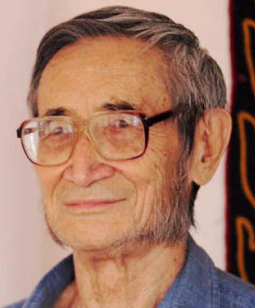
Emil Japarovich Shukurov (1938–2019) — Ornithologist, Candidate of Biological Sciences, Doctor of Geographical Sciences, Professor, Honored Scientist of the Kyrgyz Republic, full member of the New York Academy of Sciences, Chairman of the “Aleyne” Ecological Movement of Kyrgyzstan
E. J. Shukurov, born in 1938, ethnic Kyrgyz, graduated from Kyrgyz State University, Faculty of Biology and Soil Science, specializing in biology and zoology, in 1960; completed graduate studies at the Faculty of Biology and Soil Science of Moscow State University in 1962. Candidate of Biological Sciences (1968), Doctor of Geographical Sciences (1992), Professor (2001), Honored Scientist of the KR (2002).
Our own State Agency for Environmental Protection and Forestry does not have enough salaried positions for nature protection, even for those species of animals and plants included in the Red Book of the Kyrgyz Republic.
Culture as a condition for the emergence of the modern type of human. A dramatic rupture with nature.
When we read newspapers, watch television news, or listen to the speeches of statesmen, we become convinced that all our problems can be solved while completely ignoring the living natural world.
As a country, Kyrgyzstan is self-sufficient. As a state, it is incapacitated and insolvent.
The country's natural conditions allow it to provide its population with everything vitally necessary. Moreover, it is capable of becoming a global supplier of clean drinking water and environmentally safe food produc
Culture is a phenomenon of spiritual, aesthetic production and consumption. When material consumption begins to predominate, when it becomes the primary meaning of life, culture inevitably degrades — followed by the individual, society, and humanity.
In one underdeveloped country, in response to a plea for help from a mother of many children who found herself in a desperate situation, 'compassionate' Western benefactors suggested selling one of her children 'for organs' so that the proceeds could somehow help the rest.
The problem of biodiversity conservation has arisen because the intensity of anthropogenic impact on biota now exceeds its capacity to compensate for the negative consequences of that impact.
Vecherniy Bishkek, July 13, 2012.
The tourist season at Issyk-Kul is in full swing. Thousands of people come to the lakeside to enjoy its beauty and take a dip in this unique lake. The summer period brings income to the local population, yet it is precisely during this season that the lake becomes, perhaps, most polluted.
To reach any goal, one must know the path to it. And, strangely enough, one must also know the goal itself. Because the path to nearer goals often leads away from a more distant one.
Governance is the organization of actions to achieve a goal. When it comes to state governance, this includes defining the goal and choosing the means to achieve it. There is nothing above the state that acts on a national scale and in the interests of the entire population. And the interests of the state must coincide
In the past, the mountain ranges were not the obstacle for horseback travelers that they have now become for motorists. Through the Kyrgyz Ala-Too, almost every gorge led to bountiful summer pastures — jailoo. One such gorge is Kegeti, located east of Bishkek between the basins of the Issyk-Ata and Shamshy rivers.